Safety Practices for Pedestrians:
Be Visible
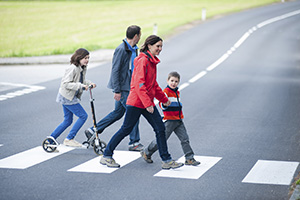 Be conscious and alert once you step out onto the road and make sure you’re visible to drivers at all times and make eye contact with them whenever possible. This is especially important at night, in low-light conditions such as dusk or dawn or in inclement weather when there is a higher chance of accidents.
> Wear lightly colored or reflective clothing at night and brightly colored clothing during the day.
> Stay in well-lit areas, especially when crossing the street.
> If possible, make eye contact with drivers in stopped vehicles to ensure they see you before you cross in front of them.
Stay Alert – Avoid Distractions
Distractions are everywhere today and becoming more and more difficult to avoid. Remember that, as a pedestrian, your eyes and ears are your best tools for keeping safe. Stay alert and watch out.
- Put down your phone. Smartphones and handheld electronic devices are a daily part of life, but they take your eyes off of the road and distract your attention.
- Don’t wear headphones. Your ears will tell you a lot about what is happening around you – be sure to use them.
Follow the Rules
- Know and follow all traffic rules, signs and signals. You need to be aware of the rules vehicles around you must follow to properly anticipate what drivers will do. This will help increase your safety.
- Never assume a driver will give you the right of way. Make every effort to make eye contact with the driver of a stopped or approaching vehicle before entering the roadway.
Walk in Safe Places
- Use crosswalks when crossing the street. If a crosswalk is unavailable, be sure to find the most well-lit spot on the road to cross and wait for a long enough gap in traffic to make it safely across the street.
- Stay on sidewalks whenever possible. If a sidewalk is not available, be sure to walk on the far side of the road facing traffic. This will help increase your visibility to drivers.
- Avoid walking along highways or other roadways where pedestrians are prohibited.
Avoid Alcohol Consumption
- Alcohol impairs your decision-making skills, physical reflexes and other abilities just as much on your feet as it does behind the wheel.
Practices for Drivers
Be Alert and Present

 When you are operating a vehicle, you have accepted a heightened responsibility for other people on the road. So being totally aware and being in the present moment is of utmost priority. So make sure you are well rested and your mind is distraction free. Pay attention to other vehicles around and Look out for pedestrians at all times. Often, pedestrians— especially younger ones— are not where they should be or where you would expect them to be. Remain vigilant at all times.
Follow rules, signs and alerts
As a driver you need to be well aware of and follow the road rules, signs, signals and alerts which will keep you and the other drivers and pedestrians safe on the road.
>Follow speed limits and be watchful.
>Drive in the middle of a lane and always use signal to change the lanes.
>Always maintain safe distance from other vehicles when driving or stopping at a signal.
>Be cautious when merging on to the main road from a street
>Be extra alert and cautious at a 4 way stop where there are no signals.
Helmets and Seat belts
>Always wear a helmet if you are driving a two wheeler. It is essential for Pillion driver safety as well.
>Drivers and passenger always seat belts whether in the front seat or back seat. Accident studies have proved again and again that seat belts save lives in accidents.
Be aware of speed limits
 Follow posted speed limits at all times. This is even more important in areas that have lower speed limits, such as school zones and neighborhood streets where pedestrians may appear suddenly. Where there is heavy pedestrian traffic you may even have to lower your speed limits.
Driving in the night and bad weather conditions
> Overall visibility is limited in the night and bad weather conditions and poorly lit areas. It is more difficult for drivers to see everything around including pedestrians. So try to avoid driving in such conditions. If you have to, make sure your lights are on and you use your signals properly. Use extra caution and drive slowly than under normal circumstances. Especially when raining, roads are slippery and applying breaks is harder, so maintain safe distance between vehicles.
Safe driving Near Home and in Driveway:
>Familiarity may make you be casual and un-attentive in your own drive way or driving closer to your home which may lead to accidents. So beware and be cautious. Be mindful of pedestrians when pulling into and out of driveways – especially if you are backing up. Pedestrians or other cars can easily enter your path without your knowledge.
Crosswalks
- Always yield to pedestrians in a crosswalk.
- When approaching a crosswalk, reduce your speed and be prepared to stop.
- When you are stopped at a crosswalk, allow enough room between your vehicle and the crosswalk so other drivers can see the pedestrians you have stopped for.
- Do not pass vehicles stopped at a crosswalk. They have stopped to allow pedestrians to pass or make sure the way is clear.
Do Not Drive Under the Influence
Alcohol and drugs impair your reaction time, reflexes, decision-making skills and overall cognitive functions. Getting behind the wheel while impaired puts everyone in danger.
 India traffic revolution